
Most Common Reason Patients Call Us
Back Pain
Back pain is the most common reason patients walk into a chiropractic office, and it's also one of the most misdiagnosed. So we see patients who've been told their pain is from one disc, when it's actually coming from a joint two levels up the chain, or from a foot mechanic that's pulling their pelvis out of alignment.
About Back Pain
Back pain isn't a diagnosis. It's a symptom. The actual cause varies enormously between patients, and the same MRI finding can produce very different pain patterns depending on what else is going on. So before we treat, we assess.
Most back pain falls into one of a few categories: mechanical (joints not moving properly), discogenic (a disc issue irritating nerves), muscular (chronic guarding or strain), or referred (pain in the back coming from somewhere else like the hips, feet, or even gut). Each category responds to different treatment. Pinning down which one — or which combination — is happening with you is what makes the rest of the plan effective.
Most patients feel relief within the first few visits as we restore proper joint movement and reduce inflammation. The full resolution depends on how long the pain has been going on and how much structural change has happened. Acute back pain usually resolves in 4 to 8 visits. Chronic back pain takes longer but responds well to a combined approach of adjustments, cold laser, rehabilitation, and medical massage.
Common Symptoms
- •Lower or upper back stiffness
- •Sharp pain with specific movements
- •Dull ache that won't quit
- •Pain that radiates into the hips or legs
- •Pain that's worse in the morning or after sitting
- •Pain that improves with movement
- •Muscle spasms
What's Actually Causing It
Common root causes include joint dysfunction in the lumbar or thoracic spine, disc herniation or bulge, posture-related muscle imbalances, foot mechanic issues pulling the pelvis out of alignment, old auto-accident injuries that never fully healed, and chronic stress patterns held in the deep core musculature.
How We Treat Back Pain
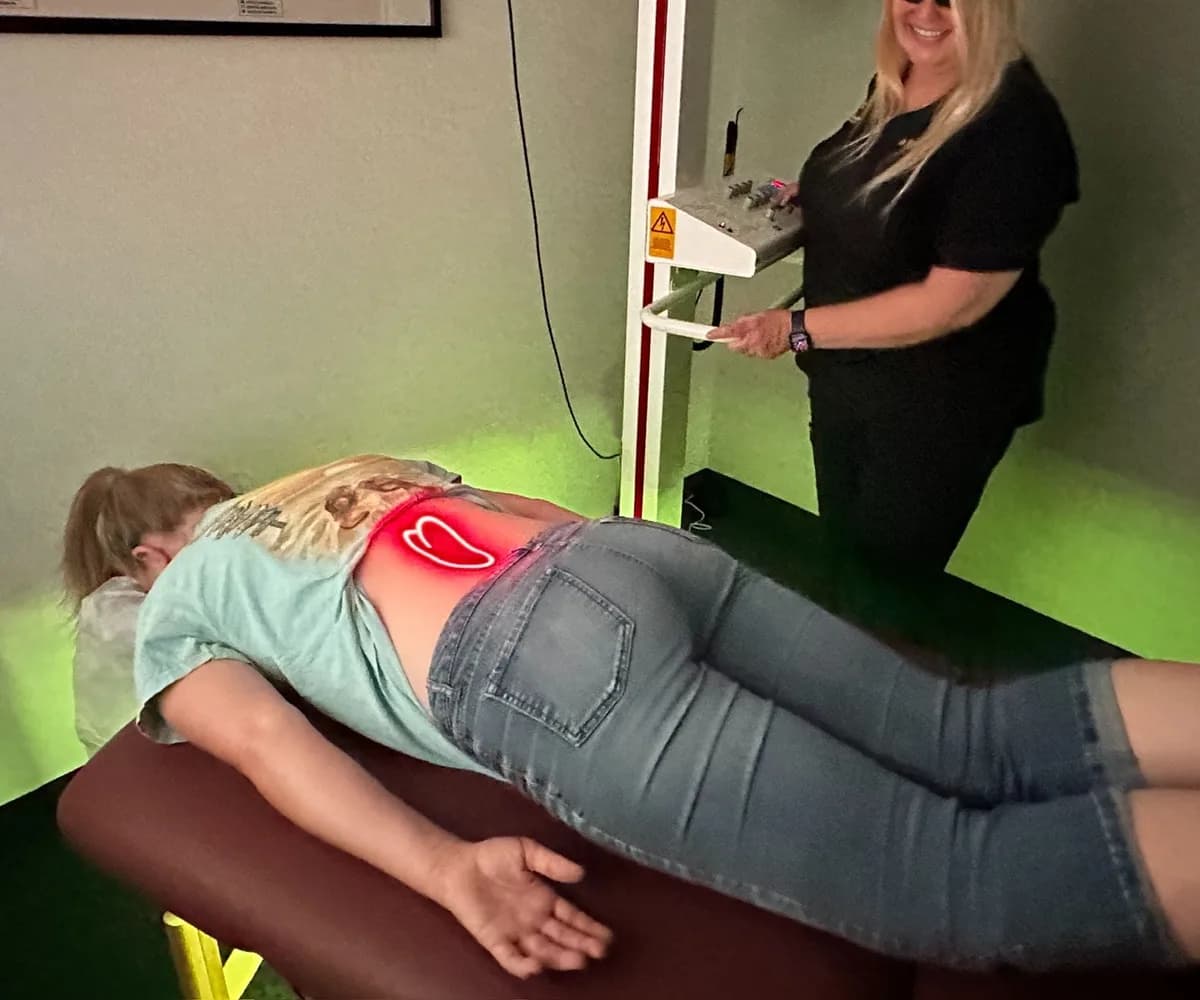
Hands-on chiropractic adjustments to correct misalignments and restore joint movement, cold laser therapy to reduce inflammation and accelerate tissue healing, custom rehabilitation exercises to retrain the muscles holding the new alignment, and medical massage to release surrounding tension. The exact combination depends on what the assessment shows.
Frequently Asked Questions
Should I see a chiropractor for back pain or wait it out?
Most acute back pain resolves on its own in a few weeks, but the underlying cause often doesn't. So patients who wait it out tend to have recurring episodes that get progressively worse. Early treatment usually means faster resolution and lower risk of chronic pain.
Do I need an MRI before I see you?
Usually not. We can do most of the diagnostic work through a physical examination. If we find signs that imaging would change the treatment plan — for example, suspicion of a significant disc herniation or compression fracture — we'll refer you for the right study.
Can chiropractic care fix a herniated disc?
Most herniated discs respond well to conservative care without surgery, especially when caught early. We use gentle adjustments, decompression-style techniques, and cold laser to reduce inflammation and take pressure off the nerve.
Related Conditions
Conditions that often present together with back pain.
Sciatica
Sciatica is nerve pain that runs down the back of the leg, and it's almost always caused by something compressing the sciatic nerve at the spine, in the pelvis, or along the path of the nerve itself. So treating it as "leg pain" misses the source.
Learn more →Herniated Disc
A herniated disc is when the soft inner core of a spinal disc pushes through the outer wall and presses on nearby nerves. So the pain isn't from the disc itself, it's from the nerve the disc is now irritating. Most herniated discs respond to conservative care without surgery, especially when caught early.
Learn more →Posture Correction
Bad posture isn't a habit. It's the result of muscle imbalances, joint restrictions, and movement patterns that have built up over time. So fixing posture means fixing the underlying mechanics, not just standing up straighter.
Learn more →Foot Pain
Foot pain often isn't a foot problem. It's a mechanical issue with how your foot strikes the ground, distributes weight, and transmits force up the chain to your knees, hips, and low back.
Learn more →Ready to Treat Back Pain?
Call us or fill out the contact form. We'll assess what's actually going on and build a plan to get you back in action.