
Conservative Care Works
Herniated Disc
A herniated disc is when the soft inner core of a spinal disc pushes through the outer wall and presses on nearby nerves. So the pain isn't from the disc itself, it's from the nerve the disc is now irritating. Most herniated discs respond to conservative care without surgery, especially when caught early.
About Herniated Disc
Discs sit between vertebrae and act as shock absorbers. The outer ring is tough fibrous tissue, and the inner core is a softer gel-like material. When the outer ring tears or weakens, the inner material can bulge or herniate outward, and that's when it presses on nerves exiting the spine.
The good news: discs do heal, and conservative care has a high success rate. Studies consistently show that 80 to 90 percent of herniated disc patients improve significantly without surgery. The body resorbs the herniated material over time when given proper conditions — reduced inflammation, restored joint motion, and appropriate movement.
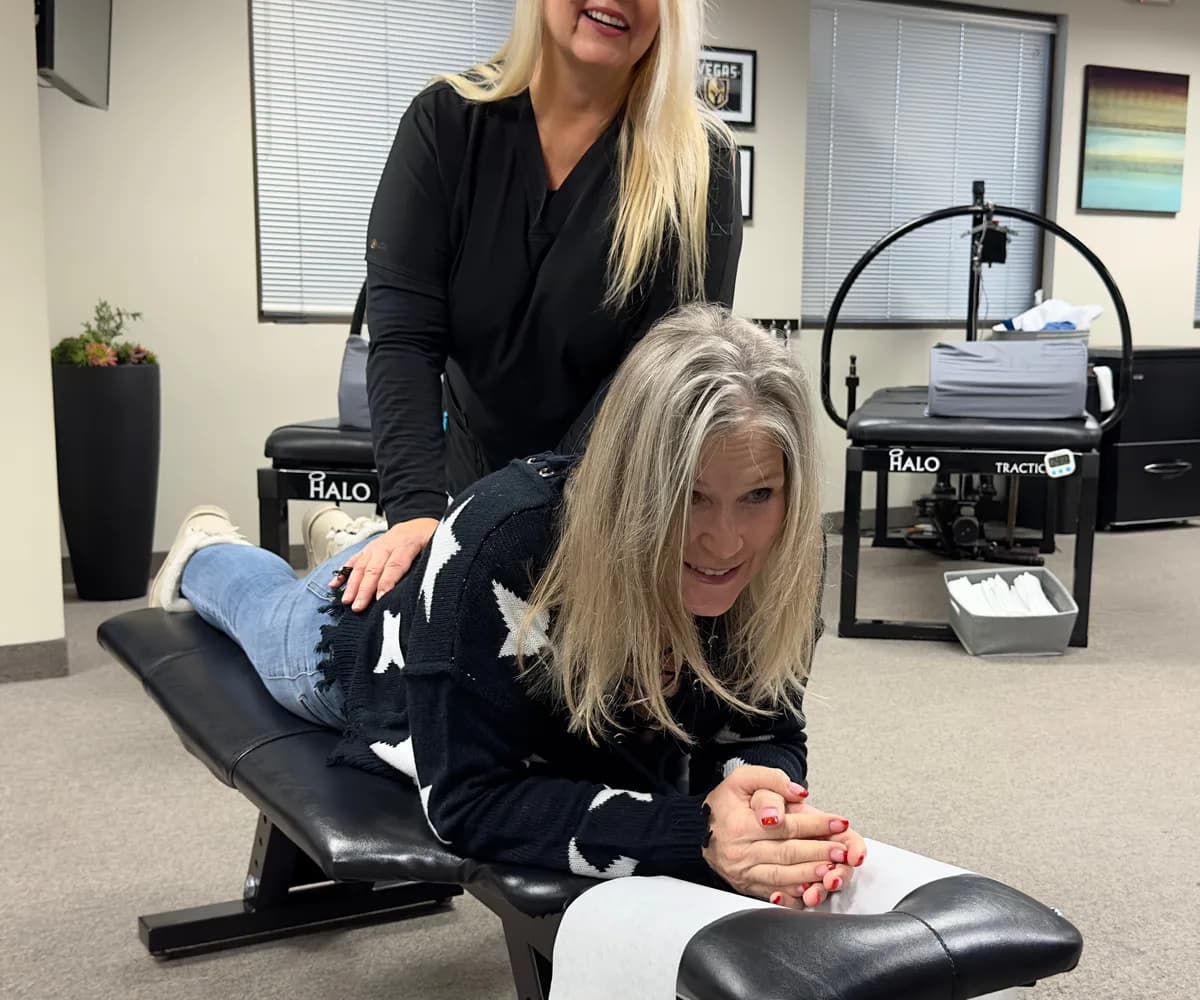
Treatment combines gentle adjustments to take pressure off the disc, cold laser therapy to reduce inflammation around the nerve, decompression-style techniques to create space for the disc to recover, rehabilitation to strengthen the support structures, and medical massage for the muscle guarding that often accompanies disc pain. Most patients see meaningful improvement in the first 4 to 8 visits.
Common Symptoms
- •Sharp pain with specific movements
- •Radiating pain into an arm or leg
- •Numbness or tingling
- •Muscle weakness
- •Pain that changes with position
- •Pain worse with sitting, coughing, or sneezing
- •Loss of normal reflexes in the affected limb
What's Actually Causing It
Cumulative wear and tear on the discs from poor posture, sedentary work, and repetitive strain. Acute injuries like lifting too heavy with poor form or trauma from auto accidents. Degenerative changes that weaken the outer ring of the disc over time.
How We Treat Herniated Disc
Gentle adjustments to take pressure off the disc, cold laser to reduce inflammation, decompression-style techniques to create space for disc recovery, rehabilitation to strengthen the support structures, and medical massage for the surrounding muscle guarding.
Services We Use
Frequently Asked Questions
Can a herniated disc heal without surgery?
Yes, in most cases. Studies show 80 to 90 percent of herniated disc patients improve significantly with conservative care. The body reabsorbs the herniated material over time when given the right conditions.
Is chiropractic adjustment safe for a herniated disc?
Yes, when performed by a chiropractor trained to assess and treat disc injuries. Dr. Binkowski uses gentle techniques specifically chosen for the type and location of the disc issue.
How long until I see improvement?
Most patients feel measurable improvement in the first 4 to 8 visits. Full healing of the disc itself takes longer — months in some cases — but symptom relief usually comes much sooner as inflammation drops and joint mechanics improve.
Related Conditions
Conditions that often present together with herniated disc.
Back Pain
Back pain is the most common reason patients walk into a chiropractic office, and it's also one of the most misdiagnosed. So we see patients who've been told their pain is from one disc, when it's actually coming from a joint two levels up the chain, or from a foot mechanic that's pulling their pelvis out of alignment.
Learn more →Sciatica
Sciatica is nerve pain that runs down the back of the leg, and it's almost always caused by something compressing the sciatic nerve at the spine, in the pelvis, or along the path of the nerve itself. So treating it as "leg pain" misses the source.
Learn more →Neck Pain
Neck pain is another very common complaint that we treat. So a lot of the patients we see for neck pain actually have underlying posture issues from desk work, smartphone use, or driving, and the neck ends up being the loudest signal in the chain.
Learn more →Ready to Treat Herniated Disc?
Call us or fill out the contact form. We'll assess what's actually going on and build a plan to get you back in action.