

Often Not a Wrist Problem
Carpal Tunnel & Arm Pain
Pain that runs down the arm or shows up in the hand and wrist is often labeled "carpal tunnel" by default, but the actual nerve compression can happen at the wrist, the elbow, the shoulder, or even the neck. So treating it like a wrist problem when the issue is actually at the cervical spine doesn't work.
About Carpal Tunnel
The nerves that feed your hand and wrist start at the cervical spine and travel through multiple points where they can be compressed: the thoracic outlet near the collarbone, the elbow, and the wrist. True carpal tunnel syndrome is compression specifically at the wrist, but "carpal tunnel-like" symptoms more often originate higher up the chain.
Surgery for carpal tunnel often fails because the surgeon released the right structure for the wrong problem. If the actual compression is at the cervical spine, opening the wrist tunnel doesn't help. So the first step is a careful assessment to identify where the nerve is actually being compressed.
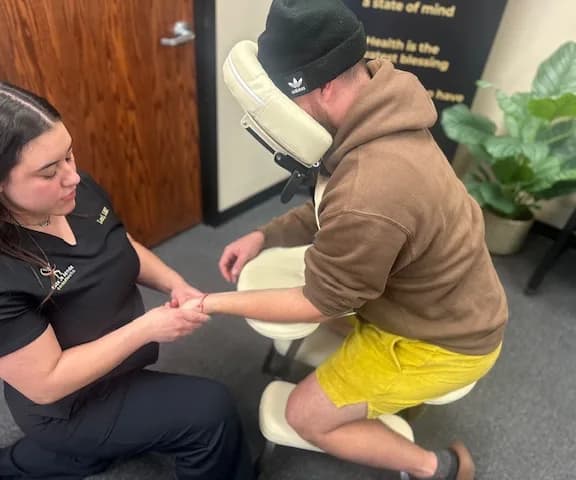
Once we know the source, treatment usually combines adjustments where the compression is (cervical, shoulder, elbow, or wrist), cold laser therapy on the affected area, medical massage to release the surrounding soft tissue, and rehabilitation exercises to address postural contributors. Most patients see meaningful relief within 4 to 8 visits, often avoiding surgery entirely.
Common Symptoms
- •Numbness or tingling in the hand or fingers
- •Weakness in the grip
- •Pain that wakes you up at night
- •Pain that radiates from the neck down the arm
- •Pain with repetitive use (typing, gripping, hairstyling)
- •Hand fatigue or dropping objects
- •Symptoms that change with neck or shoulder position
What's Actually Causing It
Cervical spine joint dysfunction compressing nerve roots, thoracic outlet syndrome at the shoulder/collarbone area, cubital tunnel issues at the elbow, true carpal tunnel compression at the wrist, repetitive strain injuries, and postural patterns from desk work.
How We Treat Carpal Tunnel
Full assessment to identify where the nerve is actually being compressed, cervical and shoulder adjustments where needed, cold laser therapy on the affected area, medical massage to release the surrounding soft tissue, and rehab exercises to address postural contributors.
Services We Use
Frequently Asked Questions
How do I know if my carpal tunnel is actually a neck problem?
Common signs: symptoms change when you move your neck, you have neck pain or stiffness alongside the hand symptoms, or symptoms involve the whole arm rather than just specific fingers. A careful assessment can pinpoint where the actual compression is happening.
Can chiropractic care help me avoid carpal tunnel surgery?
Often yes, especially when the actual compression is higher up the chain (cervical or shoulder), or when conservative care can resolve true wrist-level compression before structural damage sets in.
How long until I feel relief?
Most patients see meaningful improvement within 4 to 8 visits. Severity and duration of the problem determine the full timeline. We'll give you a realistic estimate after the first assessment.
Related Conditions
Conditions that often present together with carpal tunnel.
Neck Pain
Neck pain is another very common complaint that we treat. So a lot of the patients we see for neck pain actually have underlying posture issues from desk work, smartphone use, or driving, and the neck ends up being the loudest signal in the chain.
Learn more →Shoulder Pain
Shoulder pain can come from the joint itself, the surrounding rotator cuff and soft tissue, the cervical spine pulling on nerves that feed the shoulder, or postural patterns that have built up over years. So treating just the shoulder when the source is in the neck or upper back leaves the actual problem in place.
Learn more →Posture Correction
Bad posture isn't a habit. It's the result of muscle imbalances, joint restrictions, and movement patterns that have built up over time. So fixing posture means fixing the underlying mechanics, not just standing up straighter.
Learn more →Ready to Treat Carpal Tunnel?
Call us or fill out the contact form. We'll assess what's actually going on and build a plan to get you back in action.