
Source Is Often Higher Up the Chain
Shoulder Pain
Shoulder pain can come from the joint itself, the surrounding rotator cuff and soft tissue, the cervical spine pulling on nerves that feed the shoulder, or postural patterns that have built up over years. So treating just the shoulder when the source is in the neck or upper back leaves the actual problem in place.
About Shoulder Pain
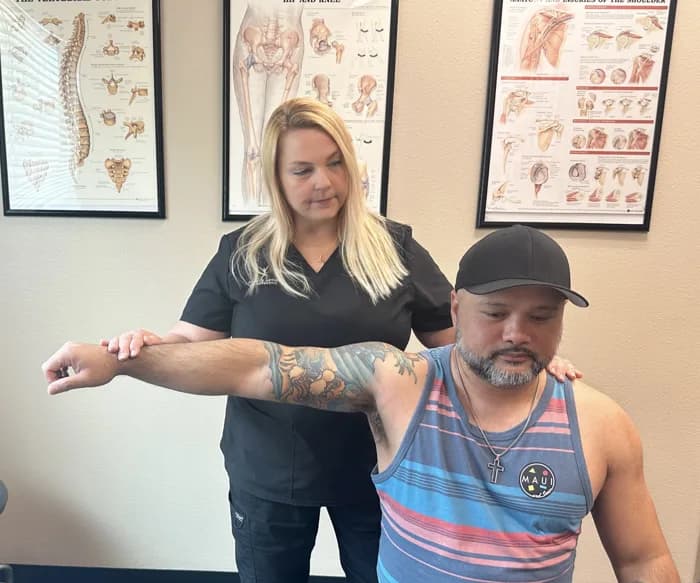
The shoulder is the most mobile joint in the body, which makes it both versatile and vulnerable. Its function depends on a coordinated dance between the glenohumeral joint, the scapula, the cervical spine, and the muscles connecting them all. Dysfunction anywhere in that system can produce shoulder pain.
Common shoulder pain patterns include rotator cuff strains or tears, impingement syndrome, frozen shoulder, cervical nerve referrals, AC joint issues, and the postural shoulder pain that comes with rounded shoulders and forward head posture. Each cause has a distinct treatment pattern, so the first visit always includes a thorough assessment to identify what's actually happening.
Treatment combines a full upper-body chain assessment from cervical spine to shoulder to elbow, adjustments to restore joint mechanics, cold laser therapy on the joint and surrounding soft tissue, medical massage and kinesiotaping for the rotator cuff and supporting muscles, and rehabilitation to retrain shoulder stability. Most shoulder pain resolves with conservative care without surgery.
Common Symptoms
- •Pain reaching overhead or behind the back
- •Stiffness in the morning
- •Clicking or popping
- •Weakness with lifting
- •Sharp pain with specific movements
- •Pain that radiates down the arm
- •Difficulty sleeping on the affected side
What's Actually Causing It
Rotator cuff strains or tears, impingement from chronic posture issues, frozen shoulder (adhesive capsulitis), cervical spine compression of nerves feeding the shoulder, AC joint dysfunction, repetitive overhead activity, and old injuries that altered movement patterns.
How We Treat Shoulder Pain
Full upper-body chain assessment from cervical spine to shoulder to elbow, adjustments to restore joint mechanics, cold laser therapy on the joint and surrounding soft tissue, medical massage and kinesiotaping for the rotator cuff and supporting muscles, and rehab to retrain shoulder stability.
Frequently Asked Questions
Can chiropractic care help frozen shoulder?
Yes. Frozen shoulder is one of the conditions Dr. Binkowski's CMUA training is particularly well-suited for. Most cases resolve with conservative care over time.
Should I get an MRI for shoulder pain?
Usually not as a first step. Most shoulder pain responds to conservative care without imaging. If we find clinical signs that imaging would change the treatment plan, we refer for the right study.
How long does shoulder pain treatment take?
Acute shoulder injuries often respond within 6 to 12 visits. Chronic shoulder issues take longer, especially when they involve postural patterns built up over years.
Related Conditions
Conditions that often present together with shoulder pain.
Neck Pain
Neck pain is another very common complaint that we treat. So a lot of the patients we see for neck pain actually have underlying posture issues from desk work, smartphone use, or driving, and the neck ends up being the loudest signal in the chain.
Learn more →Sports Injuries
Best of Las Vegas Sports Medicine winner in 2025. We treat sports injuries across every level of athlete, from professional fighters to weekend warriors, including shoulder pain, knee issues that aren't surgical, ankle sprains, hamstring strains, rotator cuff problems, and the cumulative wear-and-tear injuries that build up over years of training.
Learn more →Carpal Tunnel
Pain that runs down the arm or shows up in the hand and wrist is often labeled "carpal tunnel" by default, but the actual nerve compression can happen at the wrist, the elbow, the shoulder, or even the neck. So treating it like a wrist problem when the issue is actually at the cervical spine doesn't work.
Learn more →Posture Correction
Bad posture isn't a habit. It's the result of muscle imbalances, joint restrictions, and movement patterns that have built up over time. So fixing posture means fixing the underlying mechanics, not just standing up straighter.
Learn more →Ready to Treat Shoulder Pain?
Call us or fill out the contact form. We'll assess what's actually going on and build a plan to get you back in action.