

Often Not About the Neck
Neck Pain
Neck pain is another very common complaint that we treat. So a lot of the patients we see for neck pain actually have underlying posture issues from desk work, smartphone use, or driving, and the neck ends up being the loudest signal in the chain.
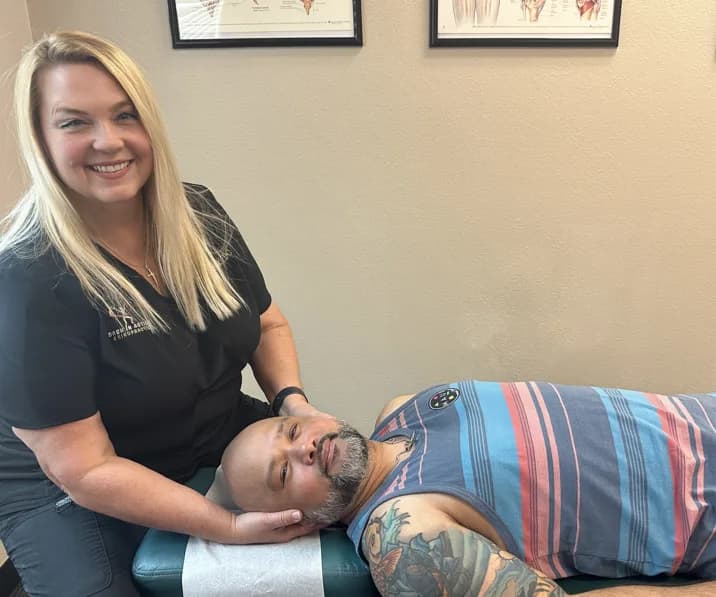
About Neck Pain
Modern life is hard on necks. Hours bent over phones, screens, and steering wheels create forward head posture, where the head sits in front of the shoulders instead of stacked over them. Every inch the head moves forward roughly doubles the load on the cervical spine and the muscles in the upper back. Over time, that load creates joint dysfunction, muscle tightness, nerve irritation, and the headaches that often come with chronic neck pain.
Neck pain can also stem from auto-accident whiplash, sports injuries, sleeping in an awkward position, or chronic stress held in the upper traps and levator scapulae. Each cause has a slightly different treatment pattern, which is why assessment matters before any adjustment.
Most patients feel meaningful relief within the first 2 to 4 visits as we restore cervical joint movement and start working on the postural patterns feeding the problem. Long-term resolution depends on whether you can address the daily habits driving the dysfunction, so home exercises and ergonomic guidance are part of every neck-pain plan.
Common Symptoms
- •Stiffness when turning your head
- •Dull ache between the shoulder blades
- •Headaches at the base of the skull
- •Jaw tension
- •Tingling in the hands or fingers
- •Pain that worsens after long sitting or driving
- •Restricted range of motion
What's Actually Causing It
Forward head posture from desk work, smartphone use, and driving. Auto-accident whiplash, sports injuries, sleeping with poor support, and chronic stress held in upper trap and levator scapulae muscles. Cervical disc issues and underlying joint dysfunction in the upper thoracic spine.
How We Treat Neck Pain
Targeted cervical adjustments to restore joint motion, posture analysis and correction, rehabilitation exercises for the deep neck flexors, kinesiotaping for postural support, and cold laser to reduce inflammation around the cervical joints.
Services We Use
Frequently Asked Questions
Can chiropractic care help tension headaches?
Yes, when the headaches are connected to cervical dysfunction or posture, which they usually are. Most tension headache patients see meaningful frequency and severity reduction within a few weeks of starting care.
Is neck adjustment safe?
Yes, when performed by a properly trained chiropractor after appropriate screening. Dr. Binkowski uses adjustment techniques selected for your specific situation, including very gentle methods for sensitive patients.
Why does my neck pain come with hand tingling?
Cervical joint dysfunction can compress or irritate the nerves that feed your shoulder, arm, and hand. Restoring proper joint motion usually relieves that nerve irritation, which is why the tingling tends to resolve as the neck pain resolves.
Related Conditions
Conditions that often present together with neck pain.
Migraines
Migraines aren't just bad headaches. They're a neurological event, and they often have triggers that show up in the body before the migraine itself starts. So we look at the whole picture: posture, neck mechanics, gut health, sleep, stress, hormonal patterns.
Learn more →TMJ
TMJ (temporomandibular joint) issues affect the jaw joint and the muscles around it, and they're often connected to neck mechanics, posture, stress, and sleep patterns. So pure jaw treatment misses the upstream contributors.
Learn more →Posture Correction
Bad posture isn't a habit. It's the result of muscle imbalances, joint restrictions, and movement patterns that have built up over time. So fixing posture means fixing the underlying mechanics, not just standing up straighter.
Learn more →Whiplash
Whiplash is the soft-tissue and joint injury that happens when your head and neck snap forward and back faster than your body, usually from a car accident. So the symptoms can show up days or even weeks after the impact, and untreated whiplash often turns into chronic neck pain, headaches, and dizziness years down the line.
Learn more →Shoulder Pain
Shoulder pain can come from the joint itself, the surrounding rotator cuff and soft tissue, the cervical spine pulling on nerves that feed the shoulder, or postural patterns that have built up over years. So treating just the shoulder when the source is in the neck or upper back leaves the actual problem in place.
Learn more →Ready to Treat Neck Pain?
Call us or fill out the contact form. We'll assess what's actually going on and build a plan to get you back in action.